

CH9 Conversational Engineering
This Isn't About Writing Better Prompts

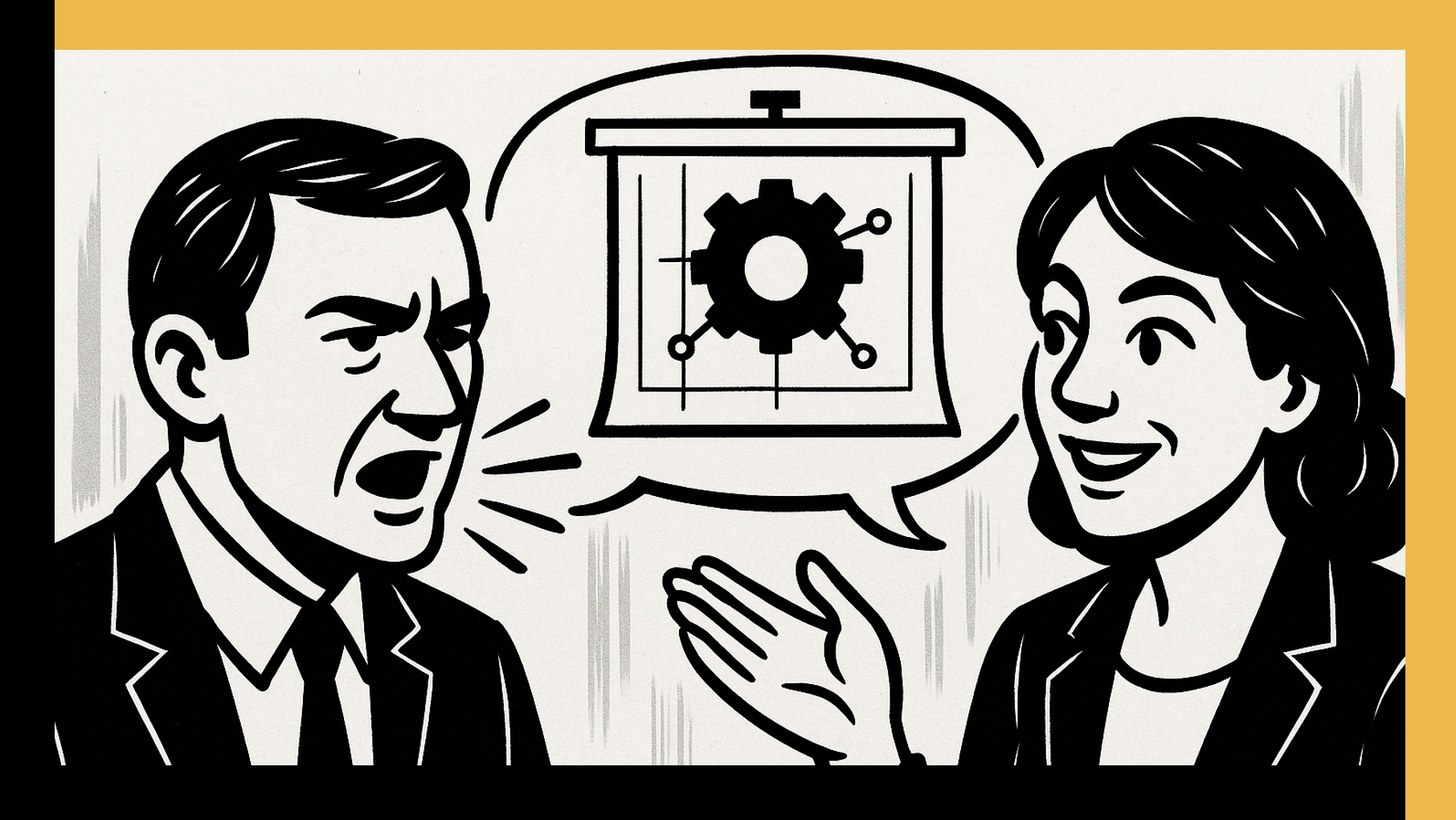
There exists a fundamental limit to human cognitive processing that no technology will ever change.
You can't multitask. You never could. Your brain can only think about four things at once.
To feel this limit in action, try this right now: Think about what you had for breakfast this morning. Now, while holding that thought, also think about what you need to do immediately after you finish reading this chapter. Add to that your current physical comfort level - are you sitting or standing, warm or cool? Finally, consider what time you need to leave your current location today.
That's four pieces of information. Now try to add a fifth: what's the weather supposed to be like tomorrow? You'll notice something interesting happens. Either one of the earlier thoughts fades from active awareness, or you have to cycle between them rather than holding all five simultaneously.
This isn't because you're not focused. It's because your working memory has reached capacity.
The same thing happens in conversations. When someone explains a new process, your brain juggles the steps, the reasoning, the timeline, and how it affects you. Add more complexity - budget implications, team dynamics, potential risks - and something has to drop out of active processing. Your brain starts filtering, prioritizing, or simply stopping new input to protect what it's already holding.
This isn't a design flaw to overcome. It's an architectural feature that creates the foundation of all human influence.
You've felt this your entire working life without naming it. That moment when someone starts explaining something complex and you find yourself nodding along, but secretly hoping they don't ask you to repeat it back. You weren't being inattentive. Your working memory was full, so your brain started discarding pieces to make room for new ones.
Or the meeting where you prepared thoroughly, but the moment someone threw an unexpected question at you, your mind went blank. Not because you didn't know the answer, but because your mental bandwidth was consumed with managing your prepared talking points.
Everyone recognizes this feeling. Few understand what's actually happening inside their head.
Every mental resource you spend on information processing reduces your capacity for social cognition - the neurological work that actually drives adoption. This reality creates what I call the Cognitive Bandwidth Principle.
The Cognitive Bandwidth Principle: Human cognitive capacity operates as a zero-sum system. Information processing and social cognition compete for the same neural resources.
Social cognition is your brain's ability to read, interpret, and respond to other humans in real-time. It includes recognizing emotional states through facial expressions and vocal tone, sensing when someone feels overwhelmed or defensive, calibrating your timing based on their readiness to process information, and adjusting your approach when you detect resistance or confusion.
Think of it as your brain's social radar system. When you walk into a room and immediately sense the tension, or when you instinctively know someone needs reassurance before they can hear difficult feedback, or when you feel the exact moment a conversation shifts from resistance to openness - that's social cognition at work.
It's what allows you to read between the lines, respond to what people need rather than just what they say, and time your communication for maximum receptivity.
Social cognition is the foundation of all human influence because it determines whether your ideas land in fertile ground or hostile territory.
When artificial intelligence handles information processing, something remarkable occurs. Human cognitive bandwidth becomes available for the social cognition work that drives influence - creating performance levels previously impossible to achieve. This preservation effect creates what I term the Elevation Effect.
The Elevation Effect: When artificial intelligence assumes information processing load, human cognitive capacity becomes available for social cognition work, enabling influence that combines inhuman analytical capability with distinctly human social intelligence.
These aren't just concepts. They're the organizing principles of professional influence in the age of artificial intelligence. And they explain why some people are becoming devastatingly effective while others struggle with interactions that should be simple.
We need new language because we're riding a timeline most people haven't recognized yet.
For most of human history, cognitive bandwidth was scarce. Professionals had to choose: be smart about information or be effective with people. The vocabulary reflected this scarcity - "people skills" versus "technical skills," "left brain" versus "right brain," "hard skills" versus "soft skills."
That scarcity is ending.
Artificial intelligence now handles information processing with capability that exceeds human capacity by orders of magnitude. Research depth that required weeks now happens in minutes. Analysis that consumed teams now happens automatically. Content generation that exhausted professionals now happens on demand.
We're transitioning from cognitive scarcity to cognitive abundance. But most professionals haven't adjusted their approach accordingly.
The Cognitive Bandwidth Principle explains why brilliant people often struggle with influence in traditional models - and why artificial intelligence changes that dynamic permanently.
The Elevation Effect explains why some professionals will become dramatically more influential while others become irrelevant - and it has nothing to do with who's smarter.
The Neurological Foundation
Human influence operates through biological mechanisms that artificial intelligence cannot currently replicate because they require embodied presence and real-time social calibration.
Trust formation requires mirror neuron activation - unconscious neurological synchronization between humans sharing physical space. Think of it like emotional contagion: when you're around someone who's genuinely calm and confident, you start feeling calmer and more confident yourself. This happens automatically when you share physical space with someone, through tiny facial expressions, voice variations, and body language that sync up below your awareness. It's why a skilled doctor's presence can make you feel better before they say a word, or why some people make you feel at ease instantly while others put you on edge.
Oxytocin release - the neurochemical foundation of trust - occurs through eye contact, vocal resonance, and presence cues that require shared physical proximity. Oxytocin is sometimes called the "bonding hormone" because it's what makes you feel connected to people. It's what happens when you lock eyes with someone and feel that moment of genuine connection, or when someone's voice tone makes you feel heard and understood. You can't get this through email or even video calls - it requires being in the same room, breathing the same air, sharing the same physical space.
The brain's threat detection system evaluates safety through real-time assessment of human behavioral signals. Your brain is constantly asking: "Is this person safe to trust?" It's like having an internal security guard that never takes a break. When someone's tone doesn't match their words, or their smile looks forced, or they seem distracted while claiming to listen, that security guard waves red flags. Once it detects threat, your brain shifts from learning mode to protection mode, making influence impossible no matter how good the information sounds.
Here's something you've experienced but never connected: You walk into a store and the salesperson greets you with genuine warmth, makes good eye contact, speaks in a calm tone. Within minutes, you feel comfortable asking questions, even trying things on. Your mirror neurons synchronized with their emotional state. Your internal alarm system relaxed. Trust hormones started flowing.
Then you walk into a different store. The salesperson seems distracted, doesn't quite make eye contact, their smile feels forced. You browse quickly and leave without buying anything, feeling like something was "off" but can't pinpoint what. Your internal security guard was waving red flags the entire time.
You thought it was intuition. It was biology.
Even if artificial intelligence eventually replicates these mechanisms, the professionals who master conversational engineering will simply elevate to the next level of human advantage: the wisdom to know when and how to deploy these capabilities with authentic intention rather than algorithmic precision.
These biological realities create the foundation of human influence that artificial intelligence can inform but has not yet authentically performed.
This transition follows a predictable pattern that mirrors every major technological shift in professional work.
Consider what happened when email replaced internal memos in the 1990s. Early adopters used email not just for faster message delivery, but to fundamentally change how they built relationships - sending quick check-ins, sharing informal insights, creating connection across organizational silos. The majority used email as a faster fax machine, missing the relationship-building advantage entirely. Late adopters resisted email altogether, watching their influence networks shrink as conversations moved to platforms they didn't use.
The same pattern emerged with mobile phones in business. Early adopters didn't just make calls from more places - they used mobility to be more present with clients, more responsive to opportunities, more connected to real-time information. The majority used mobile phones as portable desk phones. Late adopters insisted landlines were sufficient while missing deals that required real-time responsiveness.
When CRM systems emerged, early adopters used them not just to store contact information, but to engineer relationship touchpoints, track emotional contexts of interactions, and time their outreach for maximum receptivity. The majority used CRMs as digital Rolodexes. Late adopters kept everything on paper while their relationships became less systematic and their influence more random.
The pattern is always the same: Early adopters recognize the change first and begin experiencing what we now understand as cognitive elevation effects. They use the technology to free up mental capacity for higher-level work - relationship building, strategic thinking, human psychology.
The majority continue operating under the old assumptions. They use new tools to do old work faster rather than using new tools to do different work better.
Late adopters eventually recognize the shift, but only after early adopters have established significant competitive advantages through relationship networks, reputation development, and trust accumulation.
This timeline is predictable because it follows the standard technology adoption curve, but with one critical difference: the advantage being created isn't technological. It's cognitive. And cognitive advantages compound over time through relationship building, reputation development, and trust accumulation.
The professionals who recognize this shift first will operate with cognitive abundance while others struggle with cognitive scarcity. The gap widens as the transition progresses.
The Elevation Effect: A Detailed Case Study
Let me show you exactly how this works by walking through two versions of the same scenario everyone faces.
The Scenario: You need to ask your boss for a raise. You've been in your role for two years. You know you deserve it. Your last performance review was positive. But the company just announced budget tightening. You need to have this conversation.
Version One: Cognitive Scarcity Model
You spend days building your case. You compile accomplishments, research salary benchmarks, calculate value contributions. You prepare for objections: budget constraints, timing concerns, performance expectations.
Walking into your boss's office, your cognitive bandwidth is consumed with information management. You're tracking which accomplishments to emphasize, which salary figures to cite, which objections to counter.
Your social cognition capacity is essentially offline. You can't read whether your boss is stressed about other issues. You miss the micro-expressions that signal their discomfort with the timing. You don't notice when their energy shifts from listening to defensive evaluation.
You open: "I'd like to discuss my compensation."
Immediate energy shift. Defensive posture. Wary expression. But you're cognitively unavailable to read these signals or adjust accordingly.
You launch into your prepared case. Performance highlights. Market research. Value justification.
Your boss responds with predicted concerns: "Budget's tight." "We just implemented cost controls." "Performance reviews aren't until Q4."
You counter with rehearsed responses. More data. More justification. The conversation becomes transactional. Adversarial.
Your boss says they'll "think about it and get back to you."
Weeks pass. Nothing happens. The relationship feels strained.
Version Two: The Elevation Effect
You spend five minutes prompting artificial intelligence: "What are the typical concerns managers face when employees request raises during budget constraints? What pressures might they be feeling that they can't express?"
The AI responds: "Managers in budget-constrained environments typically experience: (1) Pressure from upper management to control costs while maintaining team performance, (2) Worry about setting precedent if they approve exceptions, leading to cascade of similar requests, (3) Concern about team morale - saying no to good performers while knowing they deserve recognition, (4) Need to justify any compensation decisions to their own boss, requiring documentation and business case, (5) Fear of losing valuable employees to companies with more budget flexibility, creating retention dilemma, (6) Personal stress from wanting to reward good work but lacking tools to do so meaningfully."
Your cognitive bandwidth isn't consumed with argument construction. It's available for social cognition - reading your boss's actual situation and emotional state. More importantly, you can now design the frame that will guide their thinking.
Remember from Chapter 6 how frames control where the mind travels while you speak? You realize their brain will naturally process this conversation through a scarcity frame - budget constraints, cost control, resource limitation. But you can load a different frame early: partnership around shared challenges.
You book the meeting. Walking in, you immediately notice subtle stress signals: tighter facial muscles, slightly rushed speech, papers scattered on the desk. Your social cognition system is online and processing.
Instead of opening with your request, you surface their prediction: "I know asking about compensation during budget constraints puts you in a difficult position."
Different energy. They were braced for demands. You acknowledged their constraint. You see their shoulders drop slightly - relief that you understand their position.
Now you load the partnership frame without announcing it: "I'm more interested in understanding how I can be more valuable during this period, and what that might look like for my growth path."
That single sentence shifts the frame from "employee wants more money" to "employee wants to solve problems." Their brain now processes everything that follows through partnership rather than scarcity.
Your boss relaxes. You've shifted from taking to giving. You read this change through social cognition - vocal tone softens, eye contact increases, posture opens.
They mention pressure to reduce costs while maintaining productivity. Difficulty keeping good people engaged when raises are frozen. Concern about losing key performers to companies with more budget flexibility.
You listen with full social cognition capacity available, but notice something crucial: they're now speaking within your partnership frame. They're not defending the budget - they're sharing problems they need help solving.
You sense their stress level. You notice when they need processing time. You feel the moment when they shift from explaining problems to seeking partnership.
"What if we looked at ways I could take more off your plate now, with a clear path for recognition when budget constraints improve?"
The frame holds. Partnership frame + shared problem-solving = natural collaboration.
Thirty minutes later, you're discussing expanded responsibilities, professional development opportunities, and documented plans for salary adjustment when budget constraints lift. Your boss volunteers to advocate for you when raises become possible.
Your boss now sees you as a partner in solving their problems, not another problem to manage.
The frame you loaded early - partnership around shared challenges - guided their brain's processing throughout the entire conversation. They never felt like they were being sold. They felt like they were problem-solving with an ally.
This is just the beginning of what becomes possible when you understand how to engineer the invisible frames that control thinking itself. The next chapter will show you exactly how to build this capability deliberately.
The Critical Delineation
Version One demonstrates cognitive scarcity: mental resources consumed by information management, leaving no capacity for social cognition work.
Version Two demonstrates the Elevation Effect: artificial intelligence handles psychological insight, freeing cognitive bandwidth for real-time emotional calibration and social reading.
Version One follows traditional persuasion models: overcome resistance with superior information while remaining blind to human dynamics.
Version Two follows cognitive architecture principles: use social cognition to understand and eliminate resistance before it solidifies.
Version One triggers threat detection systems: scarcity thinking and defensive budgeting because social signals go unread and unaddressed.
Version Two activates partnership frameworks: shared challenges and mutual benefit because social cognition guides the interaction toward collaboration.
This delineation applies across every influence scenario because it operates on biological constants rather than situational variables.
The Cognitive Bandwidth Principle explains why Version One fails: working memory overload prevents social cognition work, making the person effectively blind to human dynamics.
The Elevation Effect explains why Version Two succeeds: cognitive capacity becomes available for reading and responding to human psychology in real-time.
Social cognition determines whether you notice when someone feels overwhelmed, defensive, or ready for partnership. Without it, you're delivering information to a psychological landscape you can't see.
This pattern holds whether you're negotiating with clients, leading teams, teaching students, parenting children, or influencing peers. The surface details change. The cognitive architecture remains constant.
We're at an inflection point where every professional must choose their cognitive operating model.
Path One: Continue competing with artificial intelligence on information processing while maintaining traditional influence approaches.
Path Two: Use artificial intelligence to handle information processing while developing cognitive architecture skills for human influence.
Path One creates competition with machines that continuously improve at information processing tasks while leaving social cognition capacity chronically underutilized.
Path Two creates the Elevation Effect - cognitive liberation that makes influence feel effortless while becoming devastatingly effective through enhanced social cognition capability.
Most professionals will choose Path One because it requires minimal adaptation to existing approaches. It feels safer in the short term.
The professionals who choose Path Two will experience cognitive elevation that creates compound advantages over time. They'll develop influence capability that feels almost supernatural because it combines artificial intelligence analytical capability with distinctly human social intelligence.
Conversational engineering - the deliberate preparation of cognitive conditions for adoption - represents the highest expression of the Elevation Effect.
It requires presence reading, safety engineering, timing calibration, and permission architecture. These capabilities emerge from embodied cognition and social calibration that artificial intelligence can support but never perform.
When artificial intelligence provides research foundation and analytical structure, human cognitive bandwidth becomes available for the moment-to-moment social cognition work that creates adoption.
You read micro-expressions that signal cognitive overload. You sense when emotional resistance rises. You calibrate timing based on social feedback. You adjust your approach when you detect confusion or defensiveness.
The result: conversations that feel effortless while achieving outcomes that seem impossible.
You've already experienced the Elevation Effect without recognizing it. Remember the last time you had a conversation that felt surprisingly easy? Where the other person seemed to understand you immediately, where agreement felt natural, where you left thinking "that person really gets it"?
You weren't talking to someone more charismatic. You were talking to someone whose mental bandwidth was available for reading you instead of managing information. They made space for understanding you while you were drowning in content preparation.
That ease you felt? That was your brain responding to someone operating with mental abundance instead of mental scarcity.
Now you know how to create that experience for others.
The Elevation Effect isn't coming. It's here.
Some professionals are already operating with cognitive abundance while others struggle with cognitive scarcity. The gap widens daily.
The professionals experiencing the Elevation Effect are operating with a different cognitive architecture - one that leverages artificial intelligence capability while focusing human intelligence on irreplaceable social cognition work.
This isn't about using artificial intelligence tools. This is about fundamentally restructuring professional cognition to operate at the highest level of human capability while artificial intelligence handles everything else.
The transition is inevitable. The timeline is accelerating. The advantage goes to those who recognize the shift and adapt accordingly.
"What was that person's name I spoke with yesterday? I can't remember." (Conversation moves on to a different topic) (New topic entire) "O. Her name was Janice*!" (Brain relaxed)