

The AI Sorting Has Already Started
Thirty-two million jobs will transform every year. Here's how to be ready.

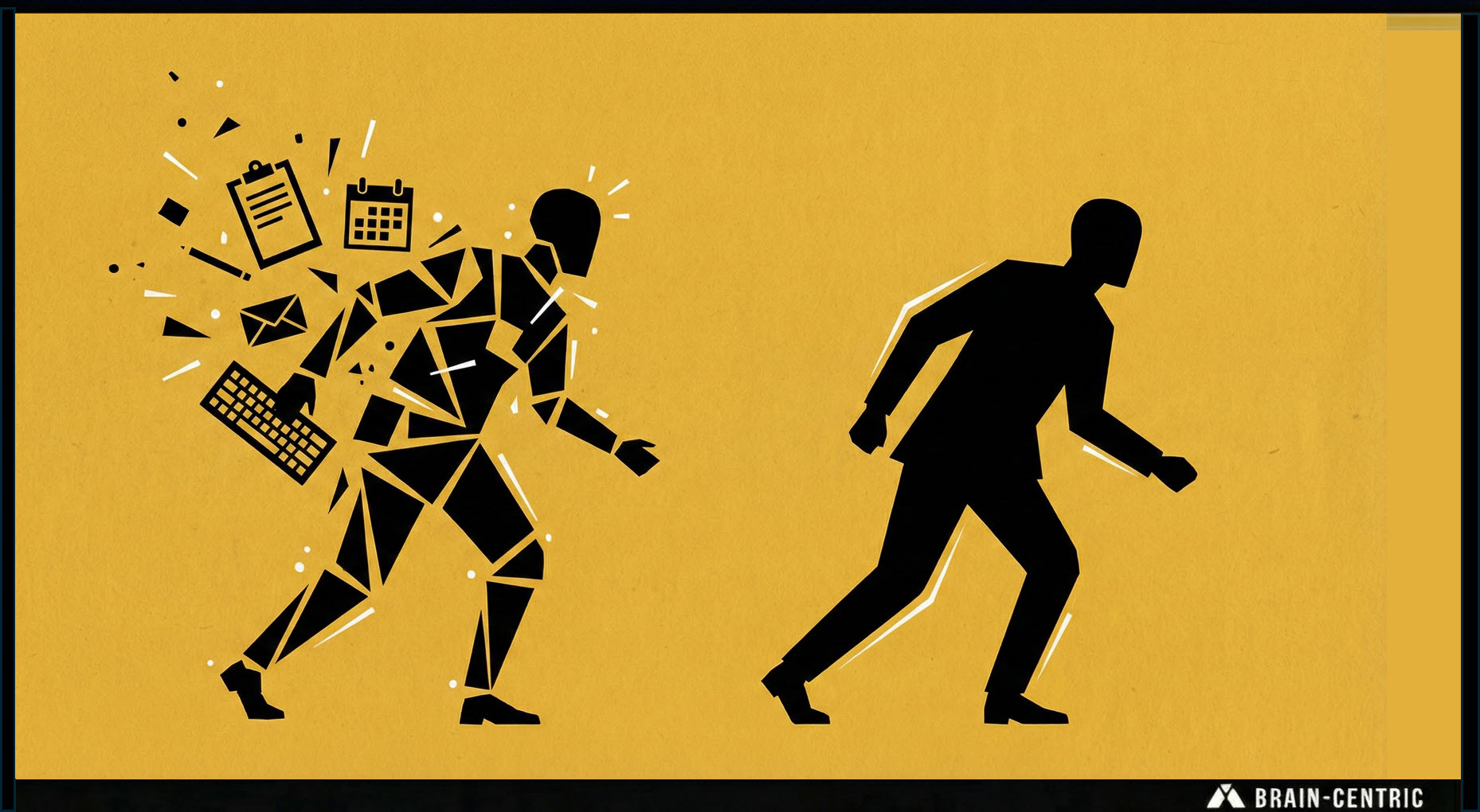
Two people answer the same customer call.
One follows the script. Resolves the ticket. Logs the interaction. Moves to the next call. Hits their numbers.
The other hears something beneath the complaint. A frustration that has nothing to do with the return policy. She stays on the line an extra forty seconds. Asks one unscripted question. Finds out the customer’s been transferred four times today. Flags it. Prevents the next three calls from ever happening.
It's the same call, but the work going on is completely different work. And, you're wishing the second person answers your next call.
The first person is about to have a very hard few years. And it has nothing to do with being bad at the job. The problem is being excellent at a job that no longer requires a human.
One of my favorite and most useful subscriptions, Daria Cupareanu put it simply: People who are afraid of AI don’t use AI. She’s right. And here’s what shocks me. We spent fifty years training humans to work like computers. The computers finally caught up. And somehow we’re offended.
Maybe you’re already using AI to some degree. Copilot suggests a sentence and you tab to accept. You paste something into ChatGPT to clean up the wording. You’ve played with image generators, made yourself into a cartoon, laughed, moved on. That’s finger painting. I don’t mean that as an insult. Finger painting is how we learn that color exists. That we can make marks. That something can come from nothing. That we can create. But you’re not in kindergarten. And that thing you’re playing with can think alongside you if you let it.
Here’s the difference between playing and working with AI:
Playing asks what can this do?
Working asks what can I stop doing so I can finally do what only I can do?
The first question is curiosity while the second serves as leverage.
Use AI for a week. Really use it. You’ll learn something about your job you might not want to know. You’ll see which parts of your work take hours but require nothing from you. Which “skills” are just repetition wearing a lanyard. The assembly line never left the factory. It just put on khakis and got a login.
Gartner’s latest research says AI will create more jobs than it destroys by 2028. But here’s the number that should get your attention right now: thirty-two million jobs will be reconfigured, redesigned, or transformed every year starting in 2028-2029. That’s not a job apocalypse. It’s a job metamorphosis. And it’s already begun.
Everyone’s waiting to see what happens. Watching from the sidelines. Hoping their role survives the sorting. Here’s a different approach: stop waiting. Reimagine your job today as if the commodity work is already gone. The scheduling. The summarizing. The formatting. The first draft. The status update. Gone. Handled. Off your plate forever. What’s left? Whatever you just thought of is your actual job. The rest was always filler.
The cruelest trick of modern work: we let exhaustion stand in for contribution. For decades. And nobody said anything because everyone was in on it.
So what do we do now? We develop something that can’t be scripted. The ability to hear what isn’t said. To notice what isn’t shown. To respond to what’s actually needed, in real time, without being told to look for it. That’s the work. That’s always been the work. We just buried it under busywork and called the busywork our job.
The people thriving with AI right now aren’t the most technical. They’re the most honest. They knew which parts of their work were theirs and which parts were just tasks shaped like a job. I can recommend a ton on Substack that challenge your thinking. They’d been waiting for permission to drop the pretense. They granted themselves permission.
Try this. Open your AI tool of choice…Claude, ChatGPT, Grok, Gemini, dealer’s choice. Copy and paste your job description, or a list of what you do in a typical week. Then ask: “Which of these tasks require real-time human judgment, and which are repeatable processes that follow patterns?” Read the answer. Argue with it if you want. But notice what you feel when you see your work sorted into two piles. Take a deep breath.
Feeling resilient? Go deeper. Think about the last time you made a difference that never got documented. The conversation you navigated. The problem you saw forming before it had a name. The moment you trusted your gut and were right. Describe it to the AI. Then ask: “What skill was I actually using here? What did I notice or do that a system following instructions wouldn’t have?” You’ll see yourself described in a way you probably haven’t been before.
One more. At the end of your next workday, ask yourself: What did I handle today that required me to be present, reading the room, adjusting in real time? Write it down. One sentence. Do it for five days. Then look at the list. That’s your actual job. The rest is packaging.
The answer is in the call you handled differently. The meeting where you noticed what no one said. The moment you felt something was off before anyone could prove it. That’s yours. That’s always been yours. AI doesn’t threaten that. AI finally makes room for it. You just need to hone it.
The job market will reorganize around this. Gartner’s probably right. New roles will emerge. Old ones will dissolve. The org chart of 2028 will look nothing like today. But you don’t have to wait for the org chart. You can reorganize yourself first.
The people who fear AI don’t use AI. The people who use AI discover what they were always capable of. The distance between those two groups is one honest week.
I would love to know, how have you used AI to allow you to be more human?
The "one honest week" exercise is the perfect forcing function. When you ask AI to sort your work into two piles, you're not just finding out what's repeatable but getting permission to finally trust the weird thing you've been noticing all along. Thank you for writing this, Rich.