

What Is a Thought, Anyway?
You've been having them your entire life. You've never once been told what they actually are.

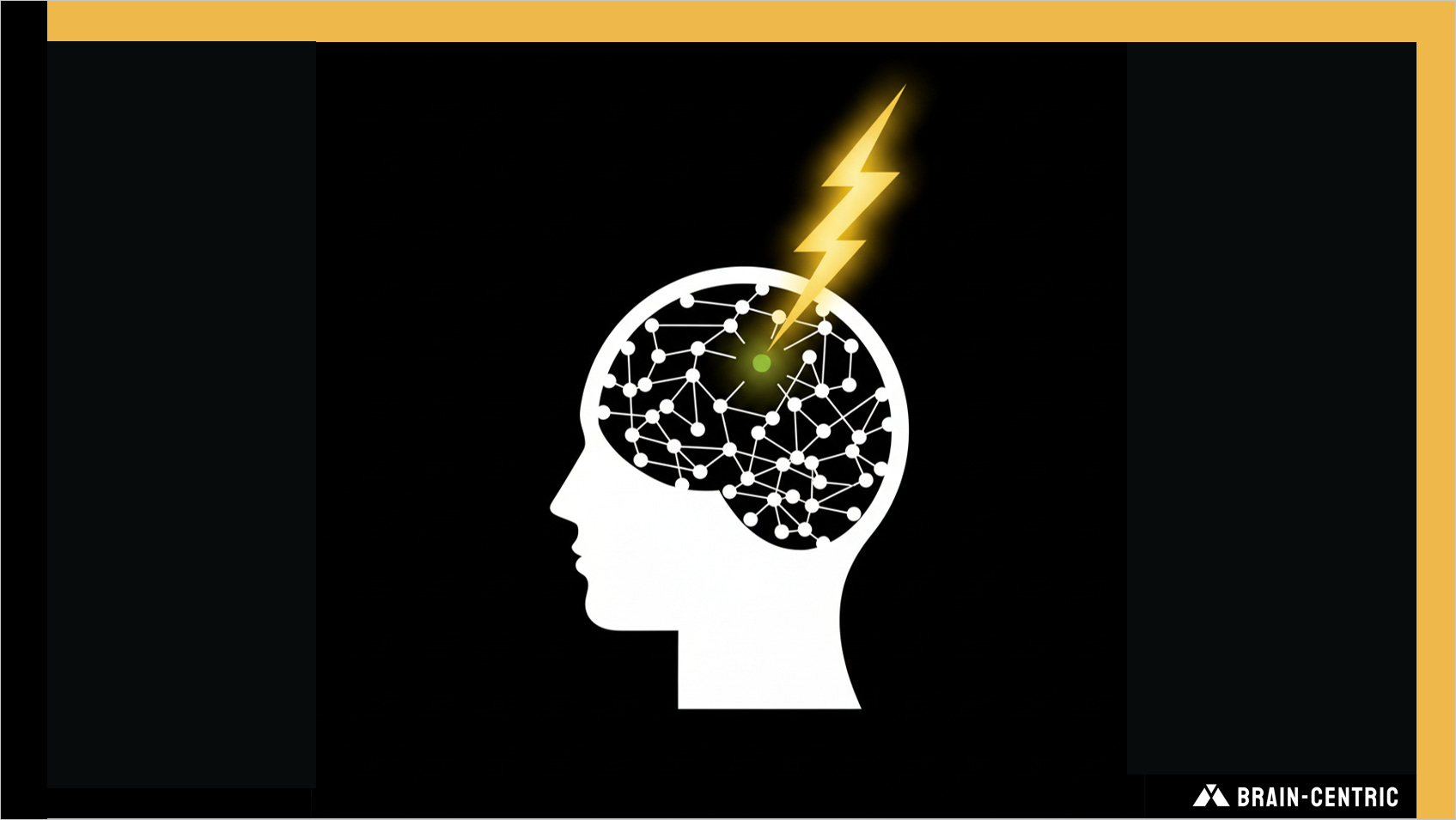
You're standing in the shower. The water's too hot but you haven't adjusted it because something just happened in your head. An idea. A connection between two things that had no business being connected. The problem you've been grinding on for a week just solved itself somewhere between the shampoo and the conditioner.
You didn't sit down to think. You weren't trying. And yet.
That thing that just happened. That flash, that click, that quiet rearrangement of everything you already knew into something you didn't know you knew. That's a thought.
When was yours? Not a vague "oh yeah, that happens to me." The specific one. The problem you'd been chewing on. The place you were standing when it clicked. The moment your brain handed you something you didn't ask for.
Hold that. We're coming back to it.
It is most simple to approach a thought by first understanding what a thought is not.
A thought is not a thing. It doesn't sit in your skull like a file in a cabinet. The dictionary says a thought is "an idea produced by thinking," which is a bit like defining water as "the wet stuff that comes from being wet." Philosophers have spent millennia chasing better definitions and mostly ended up arguing with each other.
Today, neuroscience has gotten closer.
A thought is a pattern. Specifically, it's a pattern of electrical and chemical activity firing across networks of neurons. About 86 billion of them, connected by trillions of synapses. When you picture your morning coffee, your brain isn't retrieving a photograph. It's reactivating the networks associated with warmth, smell, taste, the weight of the cup, ritual, the feeling of that first sip. A thought is your brain reconstructing an experience from your scattered pieces, assembling meaning from fragments. In your brain, it might look like this…
An Italian in Rome might have a coffee thought completely different…
This is why the same event produces different thoughts in different people. You and I can both ‘think’ of coffee, or watch the same presentation and walk away ‘thinking’ entirely different things. Our brains are running different pattern-matching software built from different lives for of different experiences.
Thoughts aren't just reflections of what's already happened either…they're constructions. Your brain doesn't just replay your stuff. It builds. It projects. It imagines what hasn't happened yet, evaluates what might go wrong, creates possibilities that don't exist anywhere in the physical world.
That's the part that matters for what's coming.
Right now, somewhere in a data center, an artificial neural network is doing something that looks a lot like thinking. It's processing patterns, making predictions, generating outputs that can pass for insight. Large language models are trained on vast oceans of human language, and they've gotten remarkably good at pattern recognition.
Looks like thinking. Sounds like thinking…
But try something before I tell you what I think about that…
Think of something you're worried about. For reals. Something that hasn't happened yet that’s worrisome. (Don’t read the next sentence yet, actually think of that worrisome thing for a few moments)
Notice what your brain is doing right now. It's not retrieving data. It's constructing a scenario from fragments of experience, running a simulation that has no training set because the event hasn't occurred. It's weighing probabilities against feelings, filtering possibilities through values you've never written down, arriving at a judgment that no dataset contains.Now ask yourself: is what you just did the same thing a machine does when it generates a prediction?
Sit with that for a second. Because the answer matters more than you think.
Here's the distinction that will define the next decade of your career.
AI pattern-matches BACKWORD
AI processes what has already been written, said, coded, published. It finds statistical relationships in existing data and generates probable outputs. It is breathtakingly good at this. Better than any human who has ever lived.HUMAN THOUGHT pattern-matches FORWARD
You and I don't just process what exists. We imagine what doesn't! You ask "what if" and mean it. You hold two contradictory ideas in your head and feel the tension between them and use that tension to create a third idea that nobody's had before.
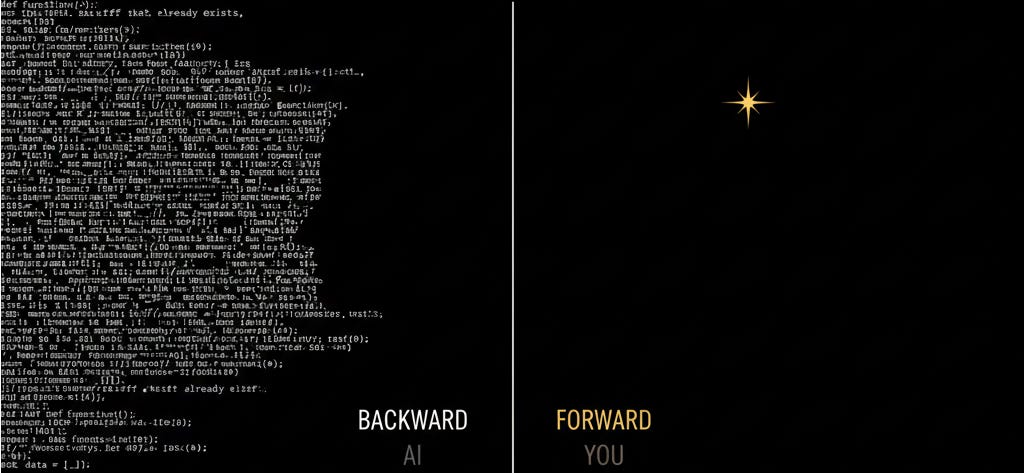
That shower moment you're still holding? AI can't do that. Not because it lacks processing power, but because it lacks the biological architecture for genuine novelty. It can remix. It can recombine. It can produce outputs that feel creative. But the generative spark, the one that connects your half-formed anxiety about the presentation tomorrow to a conversation you had with your daughter last Tuesday to something you read about the wind velocity in the Antarctic in National Geographic at the dentist’s, that's uniquely yours.
The question is whether you know how to use it. Most people don't and it's not their fault.
We were trained in systems designed to develop the exact cognitive skills that AI now does better. Memorize this. Understand that. Apply the formula. For seventy years, education and corporate training focused on the bottom half of Bloom's taxonomy. Remember, Understand, Apply. Those skills were valuable when information was scarce and human brains were the only processing power available.
That world is gone. The Cognitive Divide has happened.
AI has mastered Levels 1 through 3. It remembers with perfect accuracy. It explains with infinite patience. It applies procedures without fatigue or error. The cognitive skills that got most professionals where they are today are now commodity products available for $20 a month subscription.
What remains is Analyze, Evaluate, Create. The thinking skills that make a thought more than a pattern. They're what transform neural activity into judgment. Into insight. Into the kind of original thinking that solves problems nobody has articulated yet.
Some people call it critical thinking, but that phrase has been so overused it barely means anything anymore. What we're actually talking about is something more specific: the capacity to take incomplete information, filter it through experience, weigh it against competing priorities, and arrive at a conclusion that didn't exist before you got there. Premium Thinking, if you want a better name for it. The kind that can't be automated because it was never procedural to begin with.
Information retrieval? Processing? No, that's thinking.
The gap between people who can do it and people who've been outsourcing it is becoming the defining professional divide of our time.
Here's the thing nobody in the AI conversation seems to say plainly…the machines aren't the threat. The threat is that you'll forget you can do what they can't.
Think about the last email you sent. Did you write it, or did you edit what AI wrote? There's no wrong answer. But notice which one you did. And whether you chose it deliberately or just defaulted into it.
Every time you accept AI's draft without thinking through what you actually wanted to say, you skip a rep. Every time you take its analysis without evaluating whether the framing makes sense, you skip a rep. Every time you let it do the work of synthesis, pulling together disparate information into a coherent position, you're letting the muscle atrophy that makes you irreplaceable regardless of what you do for a living.
I'm not anti-AI. Quite the opposite. I’m not ‘Either/Or’ I’m ‘YES AND.’ AI is the most powerful thinking partner most of us will ever have. When it handles the processing, the research, the recall, the initial organization, it frees up cognitive bandwidth (thinking space) for the work only you can do. Reading the room. Sensing when a strategy looks right on paper but feels wrong in practice. Holding the ambiguity long enough to see what emerges instead of collapsing into the first plausible answer.
This is what I call the Elevation Effect, when AI handles the cognitive load, your brain becomes available for the cognitive leap. Note, the Elevation Effect only works if you still know how to leap. Knowing the tools is now table stakes.
So what is a thought, anyway?
It's the electrochemical event that makes you human in the one way that still matters professionally. It's the thing that happens between the data and the decision, between the question and the answer that wasn't in the training set, between the pattern recognition and the pattern creation.
It's the thing you do in the shower that no algorithm will ever do in a data center.
You've been having thoughts your entire life. You've been told they're valuable. What nobody mentioned is that the specific kind of thinking that makes them valuable, the analytical, evaluative, creative kind, is a skill. It can be developed. It can be sharpened. It can be trained.
Or it can atrophy while you watch, one outsourced decision at a time.
Remember that shower moment I asked you to hold at the beginning? That flash wasn't magic. It was your brain operating at the level machines can't touch, pulling fragments from different corners of your experience and constructing something new. You've always been able to do that. The question is whether you'll keep doing it on purpose.
One more thing before you go. Finish this sentence. Not with my words, with yours:
“A thought is ………………..”
Drop it in the comments. I'm genuinely curious what you came up with.
Rich, this is brilliant. The backward/forward distinction is one of the clearest framings I've seen on what separates human cognition from AI processing. And the Elevation Effect is a concept I'll be borrowing.
I want to add a layer, because your piece opened a door to something I think your readers will find fascinating.
That shower moment? It wasn't just your brain. It was your whole body.
We keep talking about thinking as if it lives in the skull. But the neuroscience your work is built on tells us something more radical — we think with our entire nervous system. Your gut has more than 500 million neurons. Your heart generates an electromagnetic field that changes based on emotional state. When that flash of insight hit you in the shower, it wasn't just 86 billion neurons firing upstairs. It was the hot water downregulating your sympathetic nervous system, your vagal tone shifting, your enteric nervous system finally getting a word in edgewise because your prefrontal cortex stopped hogging the microphone.
This is what the field of psychoneuroendocrinoimmunology has been mapping for decades — the brain, the immune system, the endocrine system, and the gut don't just communicate. They co-think.
And this is precisely why AI will never replicate that shower moment. Not because it lacks processing power or training data. Because it doesn't have a body. It has no gut to feel tension before the data confirms it. No heart rate variability shifting in response to something that "feels off" in a strategy meeting. No immune system quietly keeping score on whether the environment is safe enough for creative risk.
Your Elevation Effect is real. But I'd push it further — the elevation isn't just cognitive. It's somatic. The leap you're describing requires a nervous system that is regulated enough to access those higher functions. A stressed body locks us into the same Levels 1-3 that AI already owns. A regulated body — one that breathes, moves, connects, feels safe — that's the body that thinks forward.
So to finish your sentence: "A thought is the whole body's vote on what matters next."
Oooh that whole ‘AI processes backward and only humans can construct the future’ thing will stick in my head. So true!!
“A thought is a mental Post-it note written in disappearing ink.”